
The African safari industry is becoming increasingly digital.
A traveler planning a safari today may discover a tour operator through Google, compare several companies on social media, visit the company’s website, send a WhatsApp message, request a quotation, receive a digital itinerary and make a payment without ever speaking to the company on the phone.
Behind that seemingly simple customer journey is a growing technology ecosystem.
Safari agents and tour operators now have access to software for itinerary creation, customer relationship management, reservations, supplier management, accounting, payments, communication, artificial intelligence and digital marketing.
The challenge is no longer finding technology.
The challenge is choosing the right tools for a safari business.
A small safari operator in Tanzania may not need the same technology as a large destination management company operating across Kenya, Tanzania, Uganda, Rwanda and South Africa. A luxury safari specialist may prioritize beautiful digital proposals, while a high-volume safari agent may care more about live availability, supplier rates and booking automation.
This guide looks at the most useful categories of tools for modern African safari businesses and explains how platforms such as SafariOffice, EasyOTA, Wetu, Tourwriter, Tourplan, ResRequest and other technologies fit into the wider safari technology ecosystem.
Why Technology Matters More for Safari Businesses
Safari sales are different from selling a standard hotel room.
A traveler may spend weeks researching destinations before making a decision. A safari quotation can contain accommodation, transportation, park fees, activities, meals, transfers and additional experiences.
The itinerary may involve several suppliers across different destinations.
For example, a seven-day Tanzania safari could include Arusha, Tarangire, Serengeti and Ngorongoro. Each destination may involve different accommodation providers, rates, transfer arrangements, park fees and operational requirements.
Managing all of this manually can become difficult.
Many small operators begin with Gmail, WhatsApp, Excel or Google Sheets. These tools are useful when the business is small, but problems appear as enquiry volume increases.
Customer information becomes scattered.
Supplier rates become difficult to update.
Old quotations remain in email conversations.
Follow-ups are forgotten.
Staff may create the same itinerary several times.
Payments have to be checked manually.
This is where specialized tourism technology starts to provide real value.
The Modern Safari Technology Stack
A modern safari company does not necessarily need one giant software platform.
Instead, it can build a technology stack.
The stack may begin with a website and Google Search for attracting travelers. WhatsApp and email can capture enquiries. A CRM can organize those leads. Itinerary software can create professional proposals. Booking software can manage reservations. Payment technology can collect deposits. Accounting software can track financial performance.
Artificial intelligence can sit across several of these processes and help employees work faster.
The important thing is that the systems should work together wherever possible.
The purpose of technology is not to make a safari company look more sophisticated.
It is to reduce repetitive work and help the company sell and operate trips more efficiently.
SafariOffice for Safari Quotation and Itinerary Creation
SafariOffice is one of the most relevant platforms for safari businesses because it was developed specifically around the safari industry.
Its strength is the sales and quotation process.
A safari operator often needs to turn a customer’s requirements into a detailed itinerary containing accommodation, destinations, activities, transportation and pricing.
Doing this manually can take considerable time.
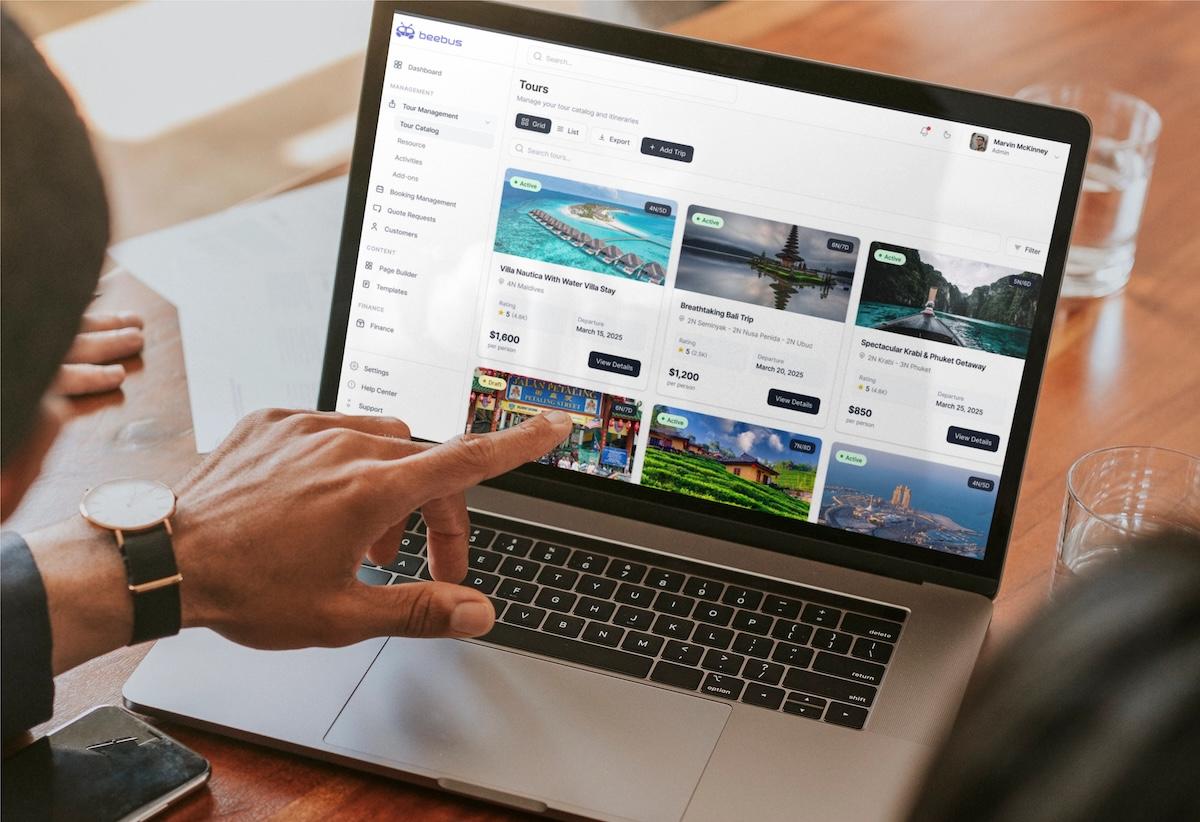
SafariOffice provides tools for creating quotations and itineraries while also providing access to destination and accommodation content. The platform also promotes features such as multiple currencies, multi-country tours, packages, upselling and AI-assisted content creation. (safarioffice.com)
This can be particularly useful for companies receiving a high number of enquiries.
Instead of starting every proposal from a blank document, the sales team can work from structured information.
That can make quotation creation faster and more consistent.
For a luxury safari company, consistency is especially important.
A traveler receiving a quotation should see a professional presentation regardless of which member of the sales team prepared it.
EasyOTA for Safari Booking and Supplier Connectivity
EasyOTA takes a more booking-focused approach.
The platform is designed for safari businesses, DMCs, experience providers and lodges and focuses on connecting suppliers, availability and bookings.
This is important because safari operators frequently sell products belonging to other businesses.
A Tanzania safari operator may need to reserve rooms at different lodges, arrange transportation, coordinate activities and combine everything into one customer journey.
EasyOTA is designed to help manage this process through live availability and booking functionality.
The platform also supports features such as multi-currency pricing, custom markups, agent access and booking widgets. (easyota.com)
Another interesting feature is its commercial model.
EasyOTA currently promotes a success-based approach rather than a traditional fixed monthly software subscription, with fees associated with confirmed bookings. (easyota.com)
That can be attractive to smaller businesses that want to limit fixed technology costs.
However, operators should always calculate the long-term cost based on their booking volume.
A percentage of bookings can be affordable at low volume but become significant as the business grows.
Wetu for Digital Travel Content and Itineraries
Wetu is another important name in African travel technology.
Its strength is content.
Safari businesses need more than prices and availability to sell a trip. They need to communicate what the traveler will experience.
A potential customer may want to know what a lodge looks like, where it is located, what wildlife can be found nearby and what activities are available.
Wetu’s ecosystem has traditionally been important to African tourism businesses because it provides destination and accommodation content that can be incorporated into digital itineraries and travel proposals.
This makes it particularly useful for DMCs, travel agents and safari companies that want to present trips visually.
For luxury travel, this can have a direct commercial benefit.
The traveler is not simply buying accommodation.
They are buying an experience.
A well-presented itinerary can therefore help communicate the value of that experience.
Tourwriter for Tailor-Made Safari Sales
Tourwriter is particularly interesting for businesses that specialize in customized travel.
Safari travelers often want to modify standard itineraries.
One customer might want luxury accommodation.
Another may want mid-range lodges.
Another may want additional nights in Zanzibar.
A family may require child-friendly accommodation.
A honeymoon couple may want private experiences.
The sales system therefore needs to make customization easy.
Tourwriter combines itinerary creation with supplier management, pricing, CRM and financial workflows. Its current positioning is particularly focused on tailor-made and FIT travel. (tourwriter.com)
For a luxury African DMC, the ability to quickly modify an itinerary while maintaining a professional presentation can be extremely valuable.
Tourplan for Larger Safari Operators and DMCs
Tourplan is a different type of platform.
It is designed for more complex tour operators and destination management companies that need broad functionality across sales, reservations, operations and financial management.
For a large safari DMC, this depth can be valuable.
The company may have several departments, numerous suppliers, international agents, large numbers of bookings and complicated financial requirements.
At that scale, a simple quotation tool is no longer enough.
The company needs a central system.
Tourplan has therefore remained relevant to larger operators that require comprehensive travel-management functionality.
However, its complexity means it is not automatically the right choice for every safari company.
A two-person safari operator selling a limited number of private trips may not need an enterprise-level system.
Technology should grow with the business.
ResRequest for Safari Accommodation and Reservations
ResRequest is particularly relevant to safari lodges, camps and accommodation groups.
The platform combines central reservations and property-management capabilities with tools for working with travel agents, tour operators and other distribution partners.
Its ResConnect technology is designed to connect properties with agents, tour operators and OTAs, while ResNova provides online booking functionality for property websites. (resrequest.com)
This makes it useful for properties that operate within the traditional African safari distribution model.
Safari lodges frequently have to manage both direct customers and trade partners.
A traveler may book directly through the lodge website while another reservation arrives through an international tour operator.
The technology needs to keep availability and reservations organized.
Zafari for African Safari Accommodation
Zafari is another platform worth considering for safari lodges and African accommodation businesses.
Its positioning is specifically focused on African properties, including safari lodges, camps and boutique hotels.
This regional focus matters.
African accommodation businesses can have pricing structures that are less common in conventional hotels.
Resident and non-resident rates, seasonal pricing, multiple currencies and guest-based pricing can all be important.
A platform built with these requirements in mind can potentially reduce the need to adapt a generic hotel system to the realities of safari accommodation.
For independent lodges and camps, Africa-specific technology can therefore be an important consideration.
Hotelogix for Broader Property Management
Hotelogix is broader than a safari-specific booking system.
It provides property management functionality covering areas such as reservations, front desk operations, housekeeping, billing, POS, guest management, reporting and distribution.
The platform currently markets its solution specifically to Tanzania hotels, resorts and safari lodges. (hotelogix.com)
This makes it useful for a lodge that wants to manage more than online bookings.
A property may need to manage rooms, restaurants, payments, housekeeping and guest services from a connected system.
In that situation, a complete PMS may be more useful than a standalone booking engine.
CRM Software for Safari Operators
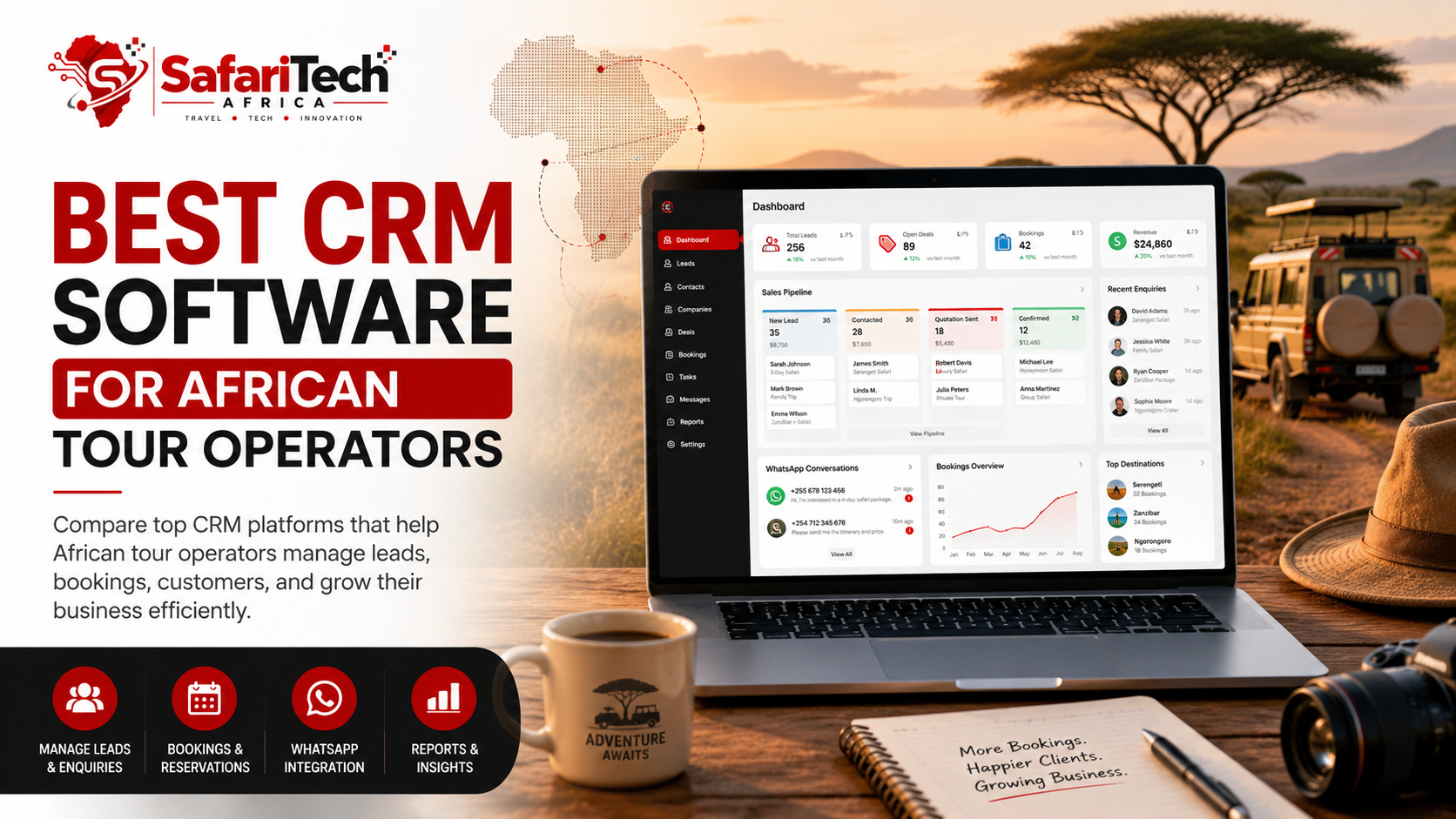
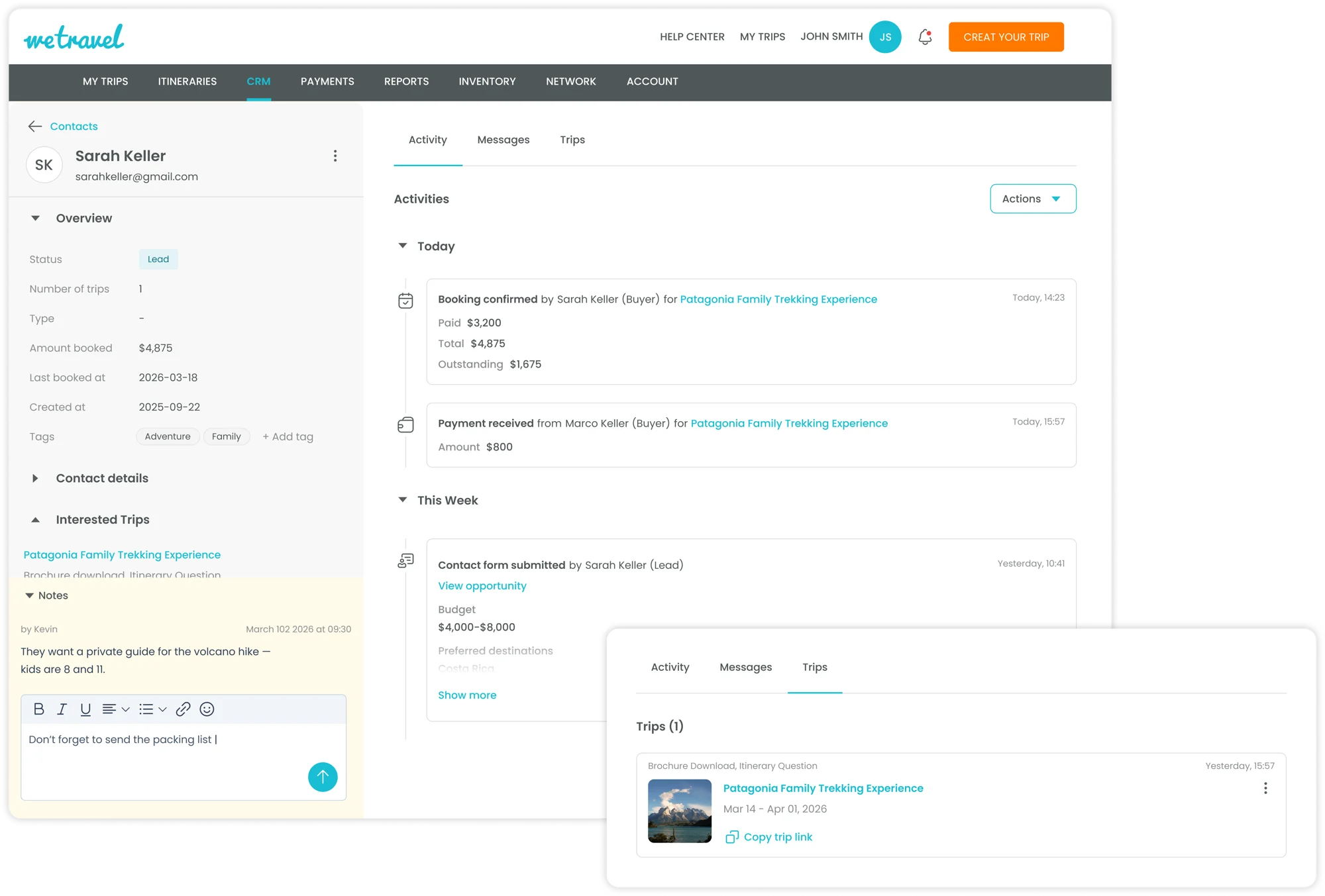
One of the most important tools for a growing safari company is a CRM.
CRM stands for Customer Relationship Management.
In simple terms, it helps a company keep track of potential and existing customers.
Consider a traveler who contacts a safari company in January but plans to travel in September.
If the conversation remains buried in WhatsApp or Gmail, the sales team may forget about the customer.
A CRM can record the enquiry and its stage.
The customer requested a quotation.
The quotation was sent.
The customer asked for a lower price.
The sales agent followed up.
The traveler confirmed.
The deposit was received.
The booking was completed.
This creates a much clearer sales process.
A CRM becomes increasingly valuable as the number of enquiries grows.
WhatsApp as a Sales Tool
WhatsApp has become one of the most important communication channels for African tourism.
A traveler may discover a safari company through Google and immediately click the WhatsApp button.
The conversation can then become the beginning of the sales process.
The operator can collect travel dates, number of travelers, destinations and preferences.
A quotation can then be prepared and sent.
The customer can ask questions and eventually confirm the booking.
This is why WhatsApp should not simply be considered customer support.
It can be part of the sales infrastructure.
The next stage is connecting WhatsApp with CRM, AI and booking systems so that conversations do not remain isolated from the rest of the business.
AI for Safari Businesses
Artificial intelligence is becoming increasingly useful for tourism companies.
A safari operator can use AI to draft customer responses, create itinerary descriptions, generate content ideas, analyze enquiries, translate communications and assist with research.
AI can also help with customer-service automation.
A traveler may ask a basic question such as when the dry season occurs in Serengeti.
An AI assistant can provide an initial response.
Another traveler may ask about a safari itinerary.
The system can collect the traveler’s requirements before handing the conversation to a human sales agent.
The important principle is that AI should assist the business rather than replace tourism expertise.
Prices, availability, park regulations, accommodation information and booking conditions should be verified before being communicated to customers.
Accounting Software
Safari companies also need to understand their finances.
A safari booking may look profitable until all expenses are calculated.
The company may need to pay a lodge, driver, guide, park fees, meals, transfers, commissions and other operational costs.
A customer paying $4,000 does not mean the business made $4,000.
Accounting technology helps separate revenue from actual profit.
For growing operators, accounting software can also make it easier to track invoices, supplier payments, customer deposits, expenses and financial reports.
The ideal situation is for the financial system to connect with the reservation or operational system.
Payment Technology
International customers expect convenient ways to pay.
Safari operators therefore need to think carefully about payment technology.
Customers may use cards, bank transfers, mobile money or other payment methods depending on their country.
African operators should consider whether their payment system supports the currencies and customer markets they serve.
Payment should also be integrated into the booking process wherever possible.
The less friction a customer experiences between accepting a quotation and paying a deposit, the easier it is to convert the sale.
Google Search and SEO Tools
Technology should also help safari operators attract customers.
This is where SEO becomes important.
A company can have excellent booking software, but it will not generate many direct bookings if travelers cannot find the website.
Google Search Console can help operators understand how their website appears in search.
Google Analytics can show what visitors do after arriving.
Google Trends can help identify changes in travel interest.
Professional SEO platforms can help businesses research keywords, competitors and content opportunities.
For example, a Tanzania safari operator may discover that customers search for specific questions about safari costs, Serengeti itineraries, family safaris and the best time to visit.
Those searches can become useful content.
SEO then becomes the top of the technology funnel.
Social Media Tools
Safari is naturally visual.
Wildlife, landscapes, lodges and cultural experiences provide strong content for Instagram, Facebook, TikTok and other social platforms.
But social media should be connected to the sales process.
A post about Serengeti should not simply generate likes.
It can direct interested travelers to a safari page, enquiry form or WhatsApp conversation.
Social media management and analytics tools can help operators maintain consistent publishing without requiring someone to manually manage every post.
Email and Customer Communication
Email remains important for international travel sales.
A customer may request a quotation through a website and then expect the complete itinerary and payment instructions by email.
Email is also valuable for pre-trip information.
Once a customer books, the company may need to send travel documents, packing information, airport instructions, accommodation details and emergency contacts.
After the trip, email can support review requests, referrals and repeat-sales campaigns.
This is where CRM and email marketing technology can work together.
Why Integration Matters
The biggest mistake a safari company can make is buying many tools that do not communicate with one another.
Imagine a customer sends an enquiry through WhatsApp.
The salesperson copies the information into Excel.
The quotation is prepared in a separate program.
The customer confirms by email.
The booking is entered into another system.
The payment is checked through online banking.
The customer’s information remains scattered across five different places.
The business has technology, but it does not have a connected system.
Integration is therefore more important than the number of tools.
A customer enquiry should ideally flow from one stage to another.
Discovery should lead to enquiry.
Enquiry should lead to quotation.
Quotation should lead to booking.
Booking should lead to payment and operations.
After the trip, the customer can enter a retention and referral process.
What Should a Small Safari Operator Use?
A small safari business should not attempt to implement enterprise software immediately.
It can start with a simple technology stack.
A professional website can establish credibility and attract organic search traffic.
Google Workspace can handle email and documents.
WhatsApp can handle conversations.
Google Sheets can manage basic supplier information.
A CRM can be introduced once enquiries become difficult to manage.
SafariOffice, EasyOTA or another safari-specific platform can be added when quotation and booking processes become too time-consuming.
The objective should be gradual digital transformation.
Do not automate a process that is not yet understood.
First create a good process.
Then automate it.
What Should a Growing Safari Operator Use?
A growing company will eventually need stronger infrastructure.
At this stage, the operator may have several salespeople, more suppliers, more customers and multiple destinations.
A CRM becomes increasingly important.
Quotation and itinerary software can reduce sales workload.
Booking software can centralize reservations.
Accounting technology can improve financial visibility.
AI can automate repetitive communication.
WhatsApp can become integrated into customer management.
The company may eventually need an integrated platform such as Tourplan or another comprehensive travel-management system.
The key is to introduce each technology when the business has a clear reason for it.
What Should a Large African DMC Use?
A large DMC has much more complicated requirements.
It may work with hundreds of suppliers and international agents while managing large numbers of FIT and group bookings.
It may have sales, reservations, operations, finance and management teams.
At this stage, centralization becomes extremely important.
The business needs one reliable source of information.
Tourplan, ResRequest, Pink Elephant and other comprehensive travel-management platforms may become relevant depending on the exact business model.
The implementation process itself becomes important.
Large companies should consider staff training, data migration, integrations, reporting, support and long-term scalability before choosing a platform.
The Future of Safari Technology
The next generation of safari businesses will probably not operate with isolated systems.
The trend is toward connected technology.
A traveler could discover a safari through Google.
An AI assistant could answer the first questions.
WhatsApp could continue the conversation.
The CRM could record the lead.
A quoting system could create the itinerary.
A booking platform could confirm availability.
A payment system could collect the deposit.
The operations team could receive the confirmed booking automatically.
After the safari, the CRM could trigger a review request and future travel campaign.
The customer experiences a simple journey.
Behind the scenes, several technologies are working together.
That is the direction in which tourism technology is moving.
Final Thoughts
The best tools for safari agents and tour operators are not necessarily the tools with the longest feature lists.
They are the tools that solve the company’s biggest problems.
For safari quotation and itinerary creation, SafariOffice is a strong specialist option.
For safari booking, live availability and supplier connectivity, EasyOTA deserves serious consideration.
For destination content and digital itinerary presentation, Wetu remains an important technology in the African travel ecosystem.
For tailor-made and luxury travel sales, Tourwriter can be particularly relevant.
For larger and more complex DMC operations, Tourplan remains a powerful option.
For safari accommodation and central reservations, ResRequest is particularly relevant.
For African safari lodges and camps looking for regionally focused technology, Zafari is worth investigating.
For properties that need broader hotel operations alongside booking functionality, Hotelogix provides a wider PMS approach.
Beyond these specialist platforms, CRM systems, WhatsApp, accounting software, payment technology, AI tools, SEO platforms and analytics all have important roles to play.
The most successful safari technology strategy is therefore not about buying the most expensive software.
It is about building a system that connects marketing, enquiries, sales, bookings, payments, operations and customer relationships.
African tourism is becoming more digital every year.
Safari companies that use technology intelligently can respond faster, reduce administrative work, improve the customer experience and compete more effectively in the international travel market.
The future safari operator will not simply sell a trip online.
It will operate an increasingly connected digital business behind that trip.
Read Also
Best Safari Booking Software for Tour Operators in Africa
Best Tourplan Alternatives for Safari Operators in Africa
Best Booking Engines for Safari Lodges in Africa
Why African Tour Operators Need a Centralized Booking System
Best CRM Software for African Tour Operators
How African Tour Operators Can Automate Customer Enquiries With AI