
For many African tour operators, the customer journey begins with a simple message.
“Hi, how much is a Tanzania safari for two people?”
Another traveler may ask about a Kenya safari, a Zanzibar excursion, Kilimanjaro, airport transfers, accommodation, park fees, or the best time to visit.
These enquiries often arrive through WhatsApp, email, Facebook, Instagram, and the company’s website. As the number of enquiries grows, answering every customer manually can become one of the most time-consuming parts of running a tourism business.
Artificial intelligence is changing that.
AI can help tour operators respond to customers faster, collect important travel details, recommend suitable experiences, prepare responses, follow up with potential customers, and transfer complicated conversations to human staff.
For African tourism businesses, this creates an opportunity to provide faster customer service without having to build a large support team.
Why Customer Enquiries Matter
A customer enquiry is often the first serious opportunity to turn a website visitor or social media follower into a paying traveler.
The problem is that not every enquiry becomes a booking immediately.
One traveler may be ready to pay. Another may still be comparing safari companies. Someone else may need a quotation before making a decision.
Without a structured system, it is easy to lose track of these conversations.
A message can remain unanswered. A quotation can be forgotten. A potential customer can wait several hours for a response and choose another operator.
AI can help reduce these problems by making the first stage of communication faster and more organized.
AI Can Answer Common Questions Instantly
Most tour operators receive many questions that are repeated every day.
Travelers may ask about safari duration, prices, accommodation, transportation, park fees, departure locations, what is included, payment methods, and cancellation policies.
An AI assistant can be trained or connected to the company’s approved information so it can answer these common questions automatically.
Instead of waiting for an employee to become available, the customer can receive an immediate response.
This is especially useful for African tour operators serving international markets because customers may be contacting the company while the local office is closed.
The goal is not to make every response robotic.
The goal is to make sure a customer does not have to wait several hours just to receive basic information.
WhatsApp Can Become Part of the AI Workflow
WhatsApp is already an important communication channel for many African tourism businesses.
Customers often feel more comfortable sending a WhatsApp message than filling out a long form on a website.
AI automation does not necessarily require changing this behavior.
Instead, the technology can work around the communication channels customers already use.
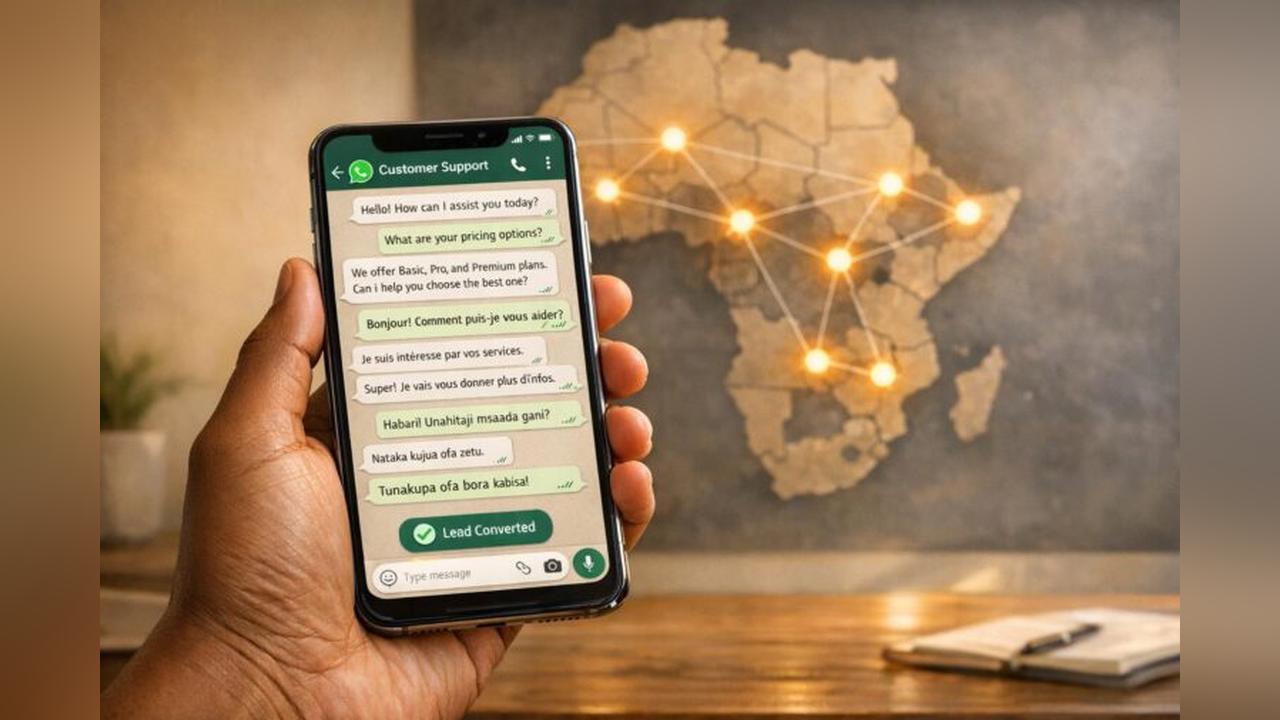
A traveler could send a WhatsApp message asking about a safari, and the AI could respond, ask for travel dates, number of travelers, preferred accommodation, and other relevant information.
The conversation can then be transferred to a salesperson when the customer is ready for a quotation.
This makes the technology feel less like a traditional chatbot and more like an automated first point of contact.
AI Can Qualify Potential Customers
Not every enquiry has the same value.
A traveler looking for a safari next month is different from someone simply researching Africa for a future trip.
AI can ask questions that help the operator understand the customer’s intentions.
For a safari company, this might include travel dates, number of travelers, destination, trip duration, budget, accommodation preference, and interests.
Once this information has been collected, the operator can see a much clearer picture of the potential booking.
Instead of receiving a message saying, “How much is safari?” the sales team could receive a structured enquiry showing that the traveler is a couple looking for a five-day private safari in September with mid-range accommodation.
That saves time and creates a better starting point for the conversation.
AI Can Recommend Suitable Packages
Once the customer’s requirements are known, AI can help identify suitable products.
A traveler staying in Zanzibar may be interested in a short mainland safari.
A family traveling with children may need a different itinerary from a couple looking for a luxury honeymoon.
A traveler interested in wildlife photography may have different priorities from someone visiting Tanzania for the first time.
AI can compare the customer’s requirements with the tour operator’s existing packages and present relevant options.
This can make the sales process more personalized.
Instead of sending the same brochure to every person, the business can present options that actually match the traveler’s needs.
AI Can Help With Quotations
Preparing quotations can take considerable time, particularly when the itinerary is customized.
The operator may need to select accommodation, calculate transportation, add park fees, consider the number of travelers, and apply the correct pricing.
AI can assist with preparing a quotation when it has access to reliable company information.
However, this is an area where operators need to be careful.
AI should not be allowed to invent prices, availability, hotel information, or inclusions.
The quotation should be based on the company’s actual products and pricing rules.
Human approval can remain part of the process, particularly for customized or high-value trips.
Automated Follow-Ups Can Recover Lost Leads
Many potential customers do not reject a safari.
They simply stop responding.
They may become busy, compare other companies, discuss the trip with family members, or postpone their decision.
Without a CRM or automated follow-up system, these leads can disappear.
AI can help maintain communication.
After sending a quotation, the system could send a polite follow-up asking whether the traveler has questions.
If the customer responds, the conversation can return to a human salesperson.
If there is no response, another follow-up can be scheduled later.
This allows the operator to maintain relationships without relying on employees to remember every enquiry manually.
AI Can Work Around the Clock
International tourism is a global business.
A safari company in Tanzania may receive an enquiry from Europe in the evening, from North America during the night, or from Australia early in the morning.
A small team cannot realistically have someone answering messages 24 hours a day.
AI can provide the initial response regardless of the time.
The customer can receive confirmation that their enquiry has been received, obtain answers to common questions, and provide the information the sales team needs.
When employees start work, they can focus on the most important conversations instead of beginning the day with hundreds of unanswered messages.
AI Can Support Multiple Languages
African tourism businesses serve travelers from many countries.
English may be the primary language of the business, but customers may communicate in French, German, Spanish, Italian, or other languages.
AI-powered translation can help tourism businesses communicate with a wider international audience.
A traveler can communicate in their preferred language while the operator maintains a consistent customer-service process.
However, important information such as prices, cancellation conditions, safety instructions, and legal requirements should be checked carefully before being sent automatically.
AI and CRM Should Work Together
An AI chatbot by itself is not enough.
The real value comes when AI is connected to a customer relationship management system.
When a traveler makes an enquiry, the system can create a customer record containing their name, contact details, travel dates, preferences, conversation history, and booking status.
The sales team can then see which customers are new, which have received quotations, which require follow-up, and which have already booked.
This creates a more organized sales process.
The AI handles repetitive communication while the CRM keeps the business’s customer information organized.
AI Can Help Small Operators Compete
One of the biggest opportunities for AI in African tourism is its potential to help smaller businesses.
A large international travel company may have dedicated sales teams, customer-service departments, marketing staff, and technology teams.
A small safari company may have only a few employees doing all of these jobs.
AI can provide some of the capabilities of a larger team without requiring the same number of employees.
A small operator can use AI to answer common questions, organize leads, prepare content, translate messages, follow up with potential customers, and support sales.
This does not remove the need for people.
Instead, it allows a small team to spend more time on activities that require human judgment and local expertise.
What Should Tour Operators Automate First?
The best approach is to start small.
There is no need to automate the entire business on the first day.
Start with frequently asked questions.
Then consider lead qualification.
After that, automated follow-ups can be introduced.
Quotation assistance, booking confirmations, pre-trip information, and post-trip communication can follow as the system becomes more reliable.
The most suitable tasks for automation are repetitive, predictable, and based on information that rarely changes.
Complex negotiations and unusual customer requests should remain with human staff.
Give AI Accurate Information
AI is only as useful as the information behind it.
A tour operator should create a reliable knowledge base containing information about its tours, destinations, prices, accommodation, transportation, inclusions, exclusions, payment methods, cancellation policies, and frequently asked questions.
This information should be kept updated.
If a safari price changes, the AI needs to know.
If a hotel is no longer available, the AI should not continue recommending it.
If a new payment method is introduced, the information should be updated.
The more accurate the underlying information, the more useful the AI assistant becomes.
AI Should Know When to Involve a Human
Automation should never mean removing humans from the customer journey completely.
Some conversations are too important or complicated for an AI system to handle alone.
A traveler may have a complicated itinerary, a special requirement, a complaint, or a question that is outside the company’s knowledge base.
In these situations, the AI should recognize its limitations and transfer the conversation to a human.
The customer should not have to start again.
The human employee should be able to see the previous conversation and understand what the traveler needs.
This is one of the most important principles of successful AI customer service.
AI handles routine conversations. Humans handle important decisions.
The Future of AI Customer Service in African Tourism
The technology is moving beyond simple website chatbots.
The next generation of tourism platforms will increasingly connect AI with CRM systems, booking engines, itinerary builders, payments, WhatsApp, email, and customer databases.
A traveler could potentially start with a WhatsApp message, provide their travel requirements, receive suitable itinerary options, accept a quotation, make a payment, and receive their travel documents without having to communicate with several different systems.
The human team would still remain involved where necessary, but much of the repetitive administrative work could happen automatically.
For African tourism businesses, this could significantly change how sales and customer service operate.
AI Will Not Replace Local Tourism Expertise
There is a major difference between answering a question and understanding a destination.
An AI system can explain what Serengeti is.
A local safari professional understands how the experience actually works.
They know the routes, seasons, accommodation, logistics, customer expectations, and practical realities that can make or break a trip.
That knowledge remains extremely valuable.
The strongest African tour operators will not use AI to replace their expertise.
They will use AI to make that expertise easier to deliver at scale.
Final Thoughts
Customer enquiries are the beginning of the booking journey, and African tour operators have a major opportunity to improve this stage with artificial intelligence.
AI can provide faster responses, collect customer information, qualify leads, recommend relevant tours, assist with quotations, automate follow-ups, support multiple languages, and work around the clock.
But successful automation requires more than installing a chatbot.
Tour operators need accurate information, a clear sales process, reliable booking data, CRM integration, and a system for transferring complicated conversations to human staff.
When implemented properly, AI can become an extension of the tourism team’s sales and customer-service operation.
For African tour operators, the future may not be about choosing between AI or human service.
It will be about combining both.
AI can respond quickly.
Technology can organize the information.
But people will continue to provide the expertise, trust, hospitality, and local knowledge that make African travel experiences memorable.
Read Also
How AI Is Changing the African Safari Industry
10 AI Tools Every African Tour Operator Should Know
The Future of AI-Powered Travel in Africa